Body-composition analyzers should stay consistent for tracking, study finds
A study of 99 competitive athletes found that InBody 770 and VisBody S30 analyzers returned different readings for several body-composition measures. Trainers tracking clients over time could avoid device-driven shifts by keeping the same analyzer for repeat checks.
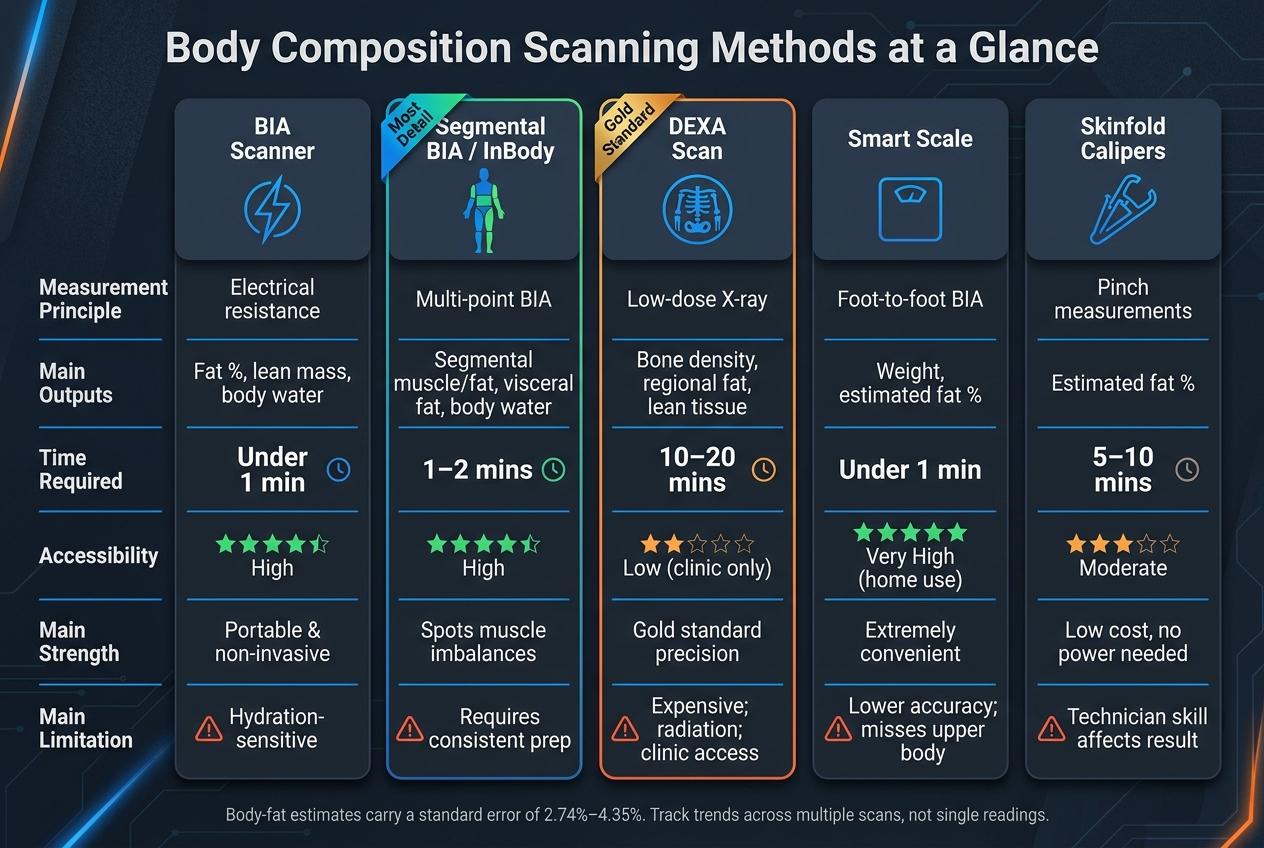
A study published Nov. 26 compared readings from InBody 770 and VisBody S30 analyzers in 99 competitive athletes. The devices agreed closely overall, but showed different readings for several body-composition measures.1
VisBody read body-fat percentage 2.42 percentage points higher and fat mass 1.74 kilograms higher. InBody read fat-free mass 1.81 kilograms higher and skeletal muscle mass 0.61 kilograms higher. InBody also reported 1.45 liters more total body water. The researchers found proportional bias for body-fat percentage, fat-free mass, and total body water.1
For trainers tracking clients over time, switching analyzers could make apparent changes reflect the device rather than the client. The authors said repeat measurements should use the same analyzer under standardized conditions.1