Study links respiratory compensation point power to cycling performance.
A study of 28 trained male cyclists found that relative cycling power at the respiratory compensation point had the strongest independent association with 19.2-kilometer time-trial completion time. The finding came from a roughly 30-minute virtual test and a male-only trained-cyclist sample.
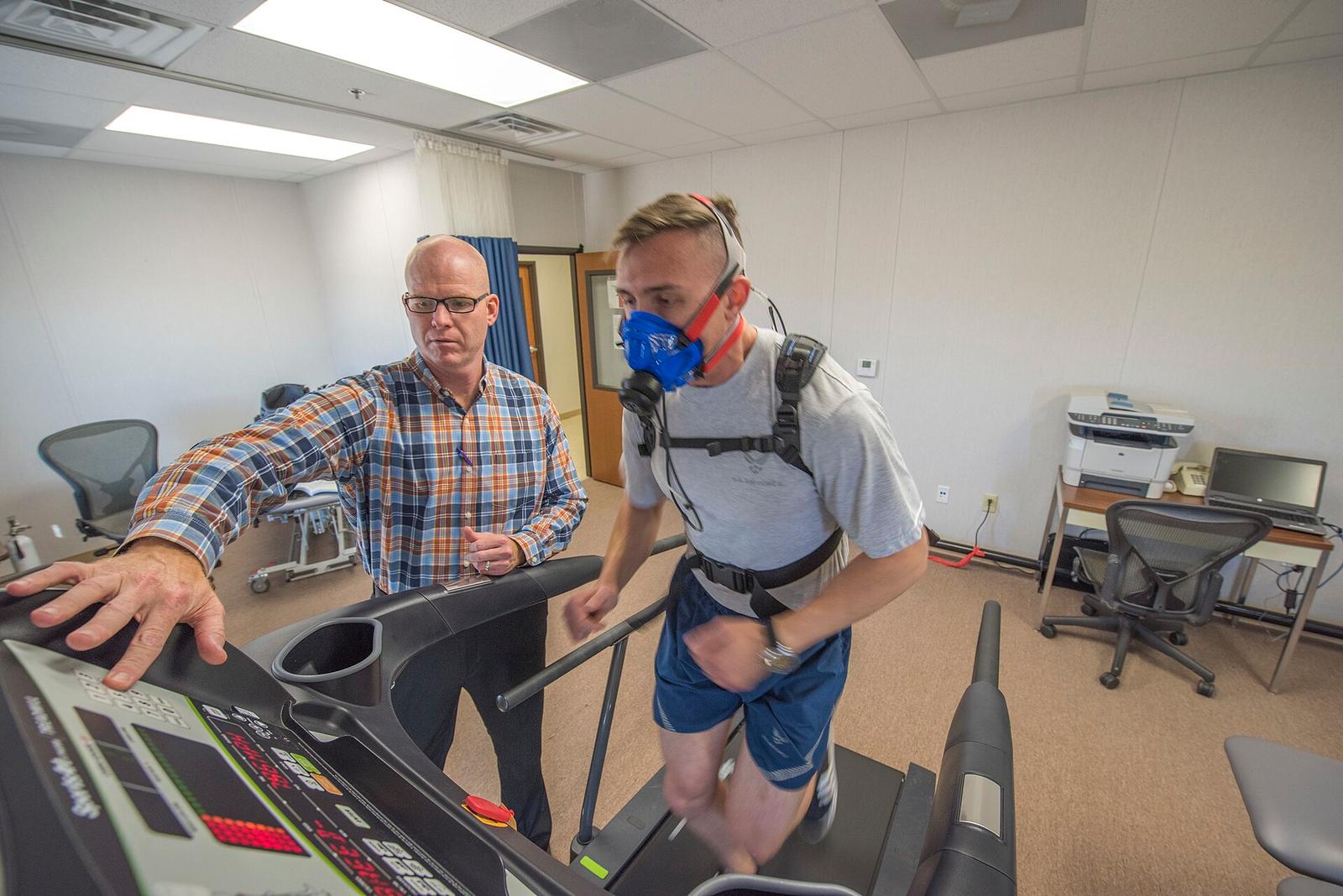
Researchers tested 28 trained male cyclists in a roughly 30-minute, 19.2-kilometer virtual time trial on their own road bikes using smart trainers. A step-ramp-step (SRS) protocol measured physiological variables before and after the trial, including power at the respiratory compensation point (RCP).1
Relative SRS-corrected power at RCP had the strongest independent correlation with completion time (r = −0.61, p < 0.001). In the multilinear regression model, SRS-corrected RCP uniquely explained 30.9% of the model’s predictive variance.1
The authors described the protocol as a practical single-session way to assess performance determinants for training prescription and athlete monitoring, while the results were limited to trained male cyclists.1